
Lip Filler Lumps: What’s Normal, What Isn’t, and When to Be Concerned
Clemens Face + Body | Brookline, Boston

Before you contact your injector in a panic, read through this guide on the different types of filler-related lumps.
Lip filler lumps are one of the most common reasons patients become anxious after treatment.
In reality, not all lumps are the same—and many are temporary, harmless, and part of the normal healing process.
Understanding the difference between swelling, filler irregularities, overfilling, and inflammation-related bumps can help patients know what is normal, what may require correction, and when to seek evaluation.
Not All Lip Filler Lumps Mean Something Went Wrong
The lips are an especially vulnerable part of the face when it comes to trauma. Not only is the tissue different from other parts of the face, but so many small and big vessels run through the lips, supplying blood flow to the mouth, nose, and cheek areas. This is why when you accidentally bite your lip, the immediate response is swelling and pain.
Patients who receive lip filler should be prepared for the downtime and healing process. Most of the time, the healing is not pretty— bruising, bleeding, swelling, tenderness, and redness are just some of the most common side effects that can occur from injections.
Additionally, temporary uneveness and unwanted filler ‘lumps’ can oftentimes to prevalent in the first 2 weeks post-injection.
Lumps From Filler That Hasn’t Fully Settled Yet
In the first several days after treatment, it is very common for filler to feel firm, uneven, or slightly “beady” as swelling and inflammation develop around the injected product. Temporary lumpiness is especially common along the wet-dry border of the lips and in areas where more structural support was added.
For most patients, these irregularities improve gradually within the first 1–2 weeks as swelling subsides and the filler integrates more naturally into the tissue. Mild firmness during this healing window is typically considered normal, particularly in patients receiving lip filler for the first time or undergoing more significant correction.
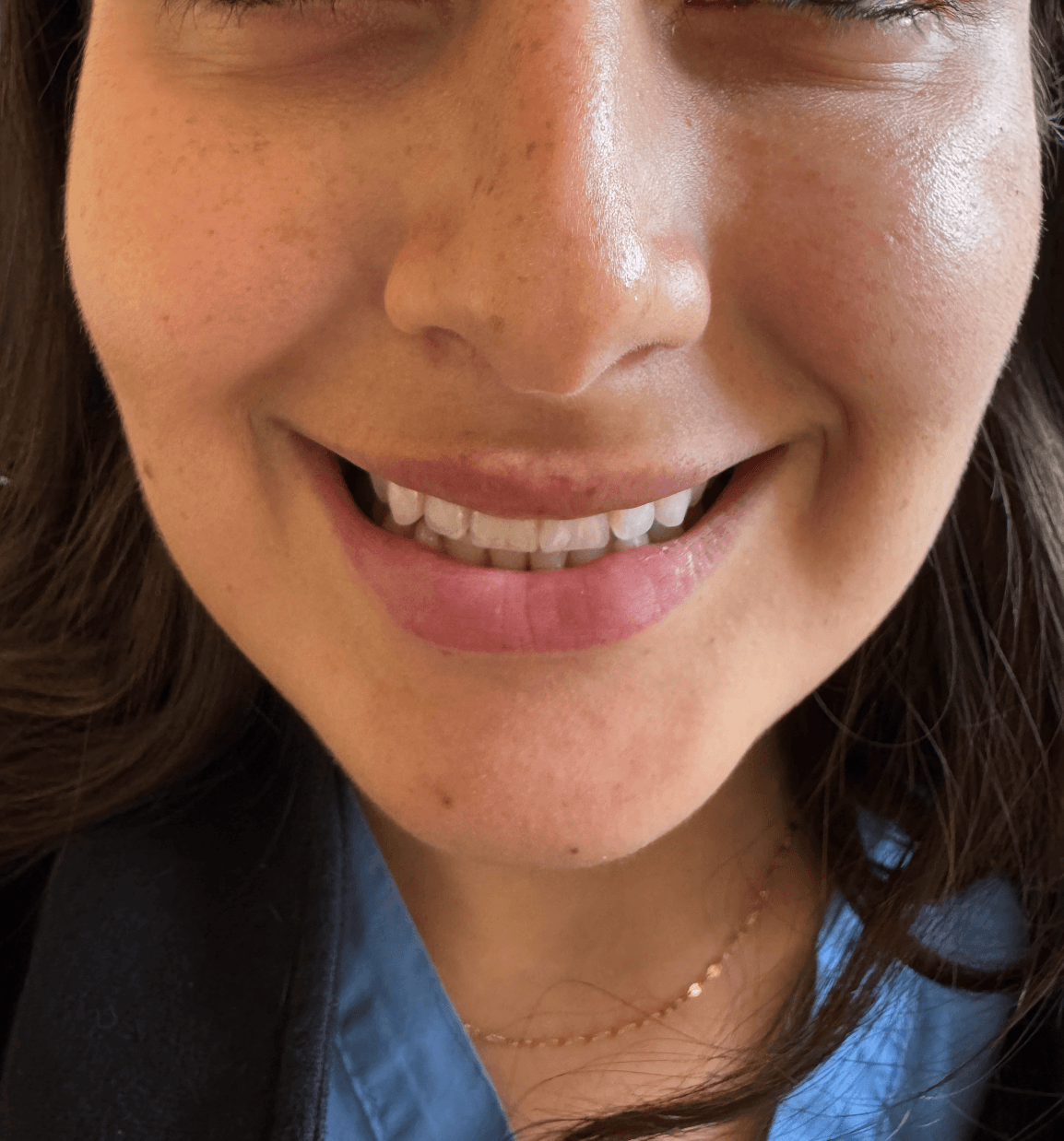
A real patient example of a filler lump that has not settled yet. Image © Clemens Face + Body. Unauthorized use or reproduction prohibited.
What to do:
Give it time and keep an eye on it
Gentle massage only if instructed by your injector
Ice and inflammation reduction
Follow-up evaluation if persistent beyond healing window as a small amount of dissolver may be used to soften the lump.
Lumps Caused by Overfilling or Poor Filler Placement
Some lip filler lumps are not related to normal healing, but instead result from excessive filler volume, repeated layering over time, or filler placed too superficially within the lips. These lumps often feel more persistent and may create visible heaviness, uneven texture, blurred lip borders, or the appearance of a “shelf” above the lip rather than soft, natural definition.
Unlike temporary post-treatment swelling, these irregularities typically do not improve significantly with time alone. In many cases, correction involves strategically dissolving small amounts of filler with hyaluronidase (Hylenex®) before allowing the lips to settle and, if desired, rebuilding them more conservatively and structurally.
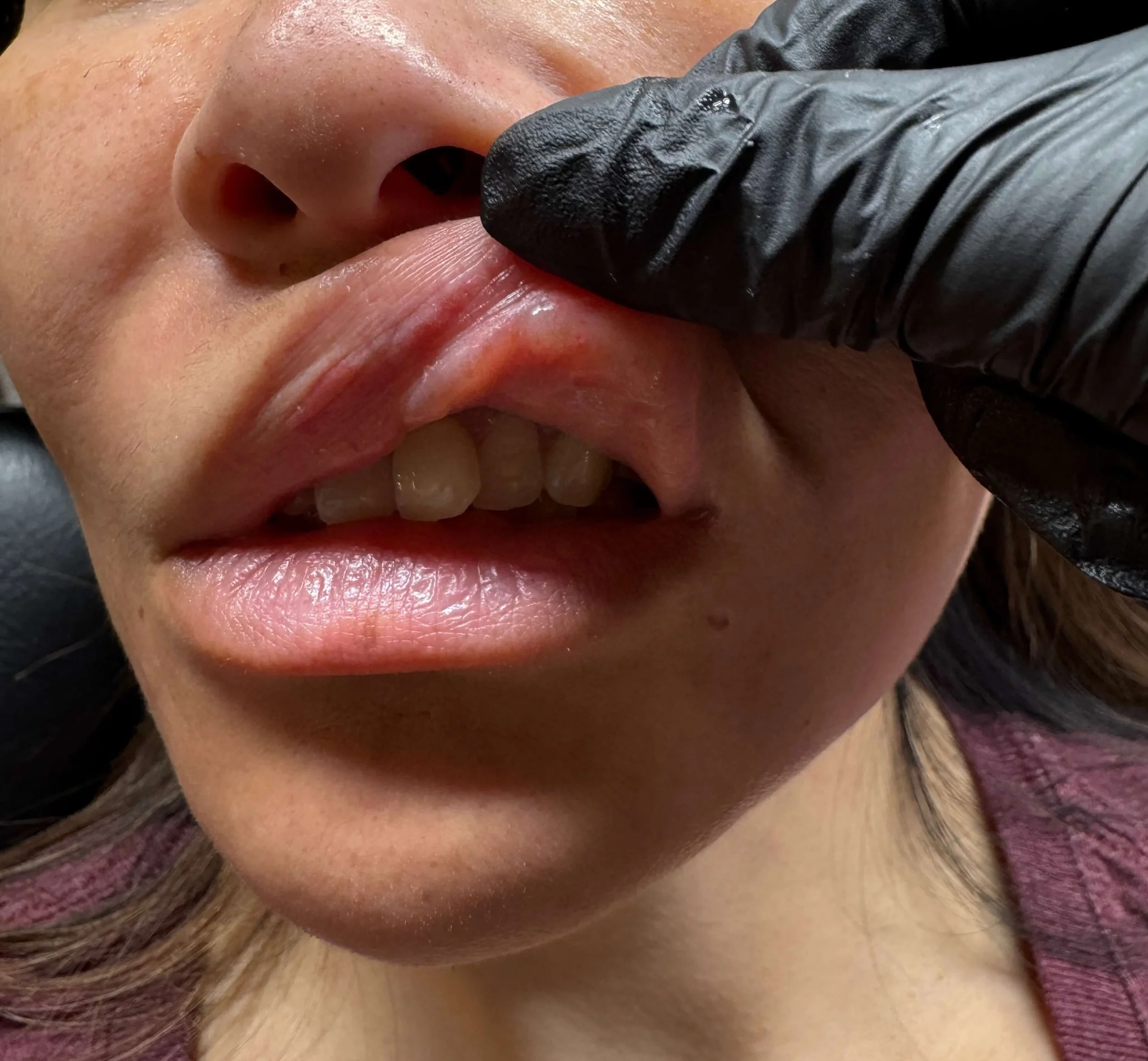
A real patient example of lip filler migration into the oral mucosa of the mouth, as a result of overfilling from a previous injector. Image © Clemens Face + Body. Unauthorized use or reproduction prohibited.
What to do:
Talk to your injector about strategic dissolving with hyaluronidase. This can mean partial dissolving, where they go after just the filler lumps OR full dissolving to bring the natural lip shape back (the latter is high recommended in most cases).
After dissolving, you can decide whether you want to rebuild a more natural-looking lip.
Lip refilling usually occurs 2 weeks after dissolving.
Intraoral Lumps and Mucoceles: When the Lump Is Not Actually Filler
In some cases, patients may develop small intraoral bumps or mucoceles—fluid-filled cysts that form when minor salivary glands become irritated or inflamed after injection-related swelling or trauma inside the lip.
These bumps are often located deeper within the inner lip rather than along the visible lip border and may feel soft, mobile, or fluctuant rather than firm like filler. Because they are inflammatory rather than filler-related, dissolving the lips will not necessarily improve them.
Many resolve gradually on their own with time and reduced irritation, though persistent or bothersome lesions may occasionally require further evaluation or treatment.
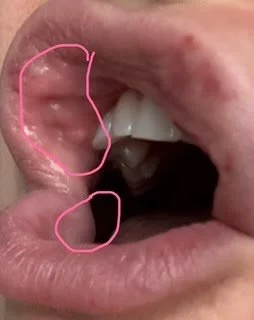
A real patient example of intraoral salivary lumps post-lip filler. These lumps self-resolve with time.
Image © Clemens Face + Body. Unauthorized use or reproduction prohibited.
What to do:
Observe and give them time to self-resolve
Warm compresses and reduce irritation by not aggressively touching them.
Most pop on their own or they just simply reduce in size.
When Should You Be Concerned About a Lip Filler Lump?
Persistent firmness beyond several weeks
Painful, inflamed, or enlarging nodules
Significant asymmetry
Delayed swelling reactions
A Side Note on Dissolving Filler
Dissolving filler has become heavily dramatized online, often making patients fear that the process is extremely painful, disfiguring, or damaging. In reality, small, strategic amounts of Hylenex® can often be used very conservatively to refine lip filler without causing dramatic swelling or “deflation.”
When performed thoughtfully, dissolving is not always an all-or-nothing process.
Sometimes only a small amount of filler needs to be softened or corrected to improve overall shape, smoothness, or balance.
Final Thoughts: Most Lip Filler Lumps Are Temporary — and Treatable
Lip filler lumps can feel alarming, especially in the age of social media where every irregularity is labeled as “migration” or a failed result. In reality, many lumps are temporary parts of healing, while others may simply require thoughtful evaluation and minor correction rather than panic.
The most important step is understanding that not all lumps are the same. Swelling, firmness, inflammatory bumps, overfilling, and true filler irregularities can all present differently and require different approaches. With proper assessment, most concerns can either improve naturally with time or be addressed safely and conservatively.
Are You Struggling with Unwanted Lip Filler Lumps?
Consult with an experienced medical aesthetic provider on what you can do to remedy this and build a more natural-looking set of lips.
