
What is Facial Balancing? An Updated Guide in 2026
Clemens Face + Body | Brookline, Boston
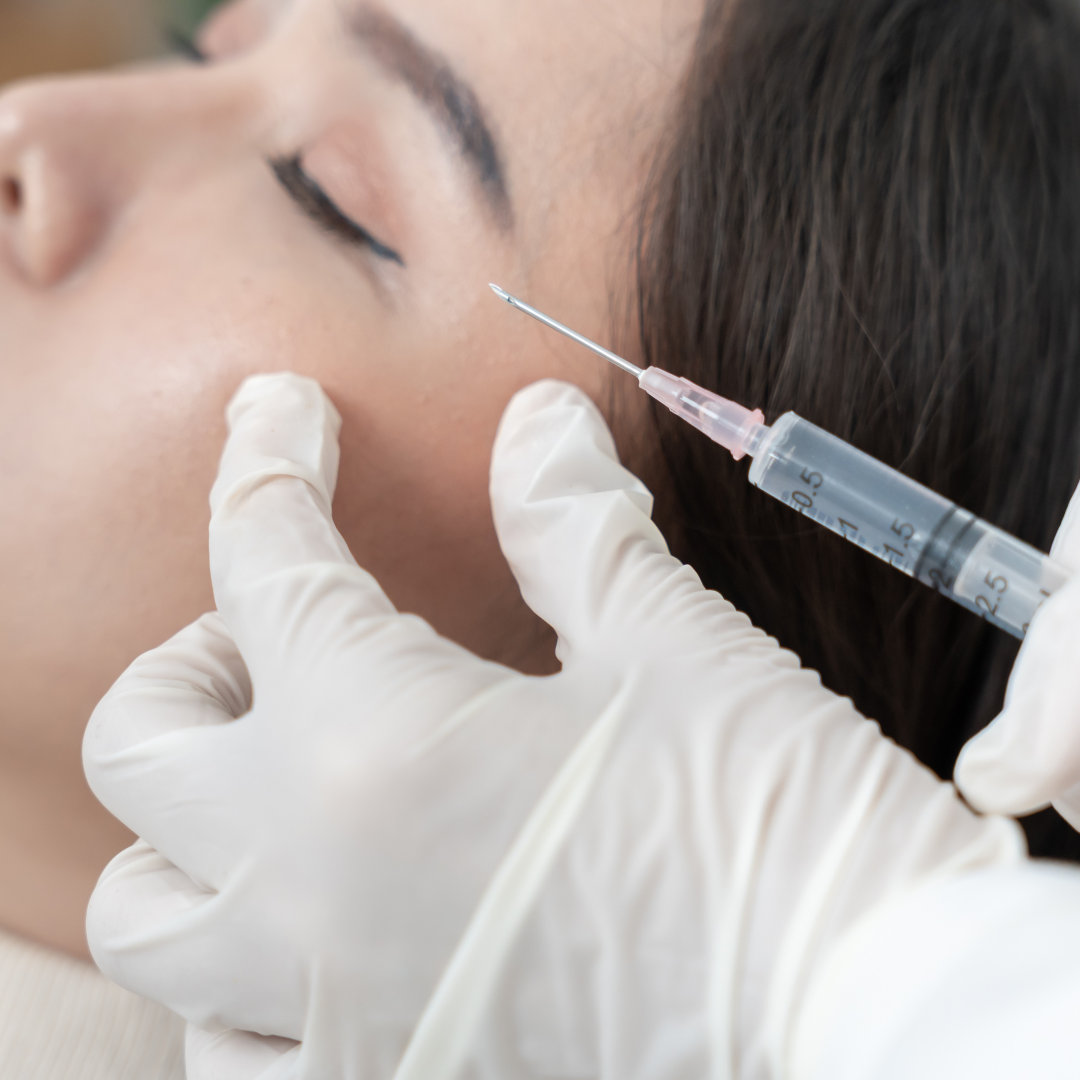
Most people don't walk into their first consultation asking for facial balancing, they just know something feels slightly off when they look in the mirror.
That feeling usually has less to do with any single feature and more to do with how all their features relate to each other as a whole.
Facial balancing is the treatment framework built around treating the face as a unified system, rather than addressing individual features in isolation. The process evaluates how each zone interacts with the others, and makes targeted adjustments that create visual harmony across the board.
This guide covers what facial balancing is, how the treatment works, what results look like, what it costs, and how to know whether it's right for you.
What facial balancing actually means
Facial balancing treats the face as a connected system rather than a collection of separate parts. The projection of your chin affects how your nose reads in profile. Your cheekbone structure shapes how your jawline is perceived. When one zone is under-projected or disproportionate, the overall face can look off even when no single feature is technically wrong. A skilled injector recognizes those relationships before deciding where, or whether, to place anything at all.
Injectors who practice true facial harmonization typically use proportion frameworks to guide their assessments.
The face is commonly divided into horizontal thirds: hairline to brow → brow to base of nose → and base of nose to chin.
Vertically, it can be assessed in fifths to evaluate temple width, cheek projection, and jawline balance.
When one zone is significantly shorter, weaker, or more prominent than the others, the face reads as unbalanced even when individual features look fine on their own.
TLDR: Natural-looking results don't happen by accident. They require an honest, full-face assessment before a single syringe is picked up. Genuine facial harmonization creates changes that look like they've always belonged to the face. The goal isn't to turn someone into a different version of themselves. It's to bring their existing features into a relationship that feels effortless and coherent.
How a skilled injector reads your face before touching it
A thorough pre-treatment assessment covers far more than what you see in the mirror. A trained injector evaluates facial structure, bone support, soft tissue distribution, asymmetry patterns, skin quality, and how the face moves during expression. No good facial balancing plan starts with a syringe, it starts with observation.
At Clemens Face + Body, Jo's consultations are one-on-one and unhurried, a direct contrast to high-volume clinics where patients are assessed and treated in the same brief appointment.
Understanding where facial fat compartments sit, how bone resorbs with age, and where muscles create tension is what separates an expert injector from an average one. Without that anatomical foundation, filler gets placed based on surface appearance alone, and that's how overinflated or unnatural results happen. The anatomy should dictate the plan. When it doesn't, the plan usually ends up needing correction later.
Two patients with the same concern, for instance, a weaker chin, may receive very different treatment plans based on their overall facial structure, skin thickness, ethnic background, and aesthetic goals. There's no template for this kind of work. The plan is built from scratch for each person, which means the consultation itself is where the most important decisions happen.
The tools behind the treatment: fillers, neuromodulators, and what they each do
Fillers: what they do
Dermal fillers add volume, structure, and contour to specific facial zones. Hyaluronic acid fillers are the most widely used because they're reversible: If results look off after treatment, they can be dissolved with hyaluronidase.
Fillers are placed in areas like the chin for projection, the cheeks for midface support, the jawline for definition, the temples for volume restoration, and the lips for proportion.
The specific product, chosen for its viscosity, elasticity, and lift capacity, is matched to the area being treated and the goal at hand.
Neuromodulators: what they do
Neuromodulators such as Botox® and Dysport® work through a completely different mechanism. Rather than adding volume, they relax targeted muscles.
In facial balancing, they're used to soften expression lines, reduce muscle-driven asymmetry, and create subtle lifting in select areas. Micro-dosing techniques allow for precise muscle relaxation without eliminating natural facial movement, which is what separates a refreshed result from a frozen one.
Fillers and neuromodulators work together to deliver a more complete result than either treatment provides on its own. In injectable facial balancing, fillers address structure while neuromodulators manage movement. A skilled injector sequences and combines both based on the individual's anatomy, not based on a standard menu or what's trending.
What results look like and how long they last
Some swelling and mild bruising in the first 48 to 72 hours after treatment is normal and expected. Neuromodulator results become visible within 3 to 5 days and reach full effect at around 10 to 14 days.
Filler results are visible immediately but settle into their final appearance over 2 to 4 weeks as initial swelling resolves. The complete picture of a facial balancing treatment typically comes into focus about a month after the appointment.
Longevity varies by product and placement. Neuromodulators typically last 3 to 4 months. Hyaluronic acid fillers in structural areas like the chin and cheeks often last 12 to 18 months or longer, depending on the product, placement depth, and individual metabolism. Areas with more movement, like the lips, break down filler faster than less active structural zones.
Most patients don't need to redo everything at each follow-up visit. The initial treatment establishes a structural foundation; maintenance appointments are generally simpler and less costly than the first session. With a consistent, quality provider, results compound over time as proportions are maintained and volume is addressed gradually rather than reactively.
Risks, side effects, and how to stay safe
Swelling, bruising, tenderness, and temporary unevenness as filler settles are all normal parts of the post-treatment experience. Most of these effects resolve within a few days to a week. Redness and mild puffiness at injection sites are common and manageable with ice and basic aftercare. Downtime is minimal for the vast majority of patients, and most people return to normal activities the same day or within 24 hours.
The more serious complications are rare, but they're worth understanding clearly. Vascular occlusion, where filler compresses or enters a blood vessel, is the most significant risk associated with injectable treatments. It requires immediate recognition and intervention, including high-dose hyaluronidase if a hyaluronic acid filler was used. Other less common complications include infection, filler migration, and persistent contour irregularities. Under-eye injections carry a higher risk profile and should only be performed by experienced, medically trained providers with detailed anatomical knowledge.
Complication rates drop significantly when treatment is performed by an injector with deep anatomical knowledge and proper technique. Clinical reviews support the importance of anatomy-driven technique and experienced providers in minimizing adverse events. Hyaluronic acid fillers carry a meaningful safety advantage because they can be dissolved if something goes wrong, non-reversible products don't offer that option. When evaluating providers, injector experience and anatomical expertise are the most important factors in both safety and outcome.
Who is a good candidate, and what does it cost?
The ideal candidate for non-surgical facial contouring wants proportional refinement rather than a dramatic transformation and has realistic expectations about what injectables can accomplish. Common candidacy drivers include a weak chin, flat cheeks, an undefined jawline, facial asymmetry, and structural volume loss with age. Adults across a wide age range qualify, from patients in their late 20s seeking early prevention to those in their 40s and 50s looking to restore structure and support.
Some people are better served by a different approach, at least for now. Active skin infections in the treatment area, pregnancy, and breastfeeding are standard contraindications. Patients whose goals require surgical correction won't achieve those results with injectables alone, and a good injector will say so clearly in the consultation rather than proceed with a plan that can't actually deliver. At Clemens Face + Body, Jo's consultations are built around honest assessment, if a treatment isn't the right fit, she'll say so and point you toward what is.
In the U.S., full-face balancing with injectables typically ranges from $1,000 to $4,500 for a standard multi-area plan, with more comprehensive treatments, or those in major metro markets, often running higher. Individual syringes of hyaluronic acid filler range from approximately $600 to $1,500 depending on the product and provider. Neuromodulators are generally priced per unit. In the Boston and Brookline market, boutique-level expertise and one-on-one care are reflected in pricing. The number of areas treated, syringes used, and whether treatment is staged across two visits all affect the final total.
The bottom line on facial balancing
Facial balancing works because it respects how the face functions as a whole system rather than treating features in isolation. The right provider doesn't start with a product, they start with your face, take the time to understand what it actually needs, and build a plan around that honest assessment. Choosing an injector who will tell you the truth, including when injectables aren't the right fit, is the most important decision in this process.
If you're in the greater Boston area and thinking about facial balancing, or simply curious about whether it makes sense for your face, the first step is a no-pressure, one-on-one consultation at Clemens Face + Body. You'll leave with a clear picture of your options and an honest opinion on what your face actually needs.
