
Is PDRN Good for Rosacea? What Patients Should Know Before Treatment
Clemens Face + Body | Brookline, Boston
Rosacea can be frustratingly unpredictable. One week your skin feels relatively calm, and the next you're dealing with redness, sensitivity, burning, or a flare-up that seems to come out of nowhere.
Because rosacea-prone skin is often more reactive and difficult to treat, many patients are apprehensive about in-office medical treatments, fearing an overly aggressive approach. But in recent years, one treatment has gained attention for its ability to heal damaged skin and create resiliency and strength: PDRN.
What Is PDRN?
PDRN stands for polydeoxyribonucleotide, a compound composed of purified DNA fragments that has been studied for its role in tissue repair and wound healing. It is also sometimes referred to as "salmon DNA," as modern formulations are derived from salmon sperm cells.
In aesthetic medicine, PDRN is commonly used as a skin rejuvenation treatment to support:
Skin healing
Hydration
Collagen production
Recovery after procedures
Overall skin quality
Its primary goal is to support the health and repair of the skin itself.
Why Rosacea Skin Is Different
To understand why PDRN may be helpful, it's important to understand what makes rosacea-prone skin unique.
Rosacea is not simply facial redness.
Many patients with rosacea also experience:
Increased skin sensitivity
Burning or stinging sensations
Impaired skin barrier function
Chronic low-grade inflammation
Difficulty tolerating skincare products
Difficulty managing acne breakouts
Frequent flare-ups triggered by heat, stress, exercise, alcohol, or sun exposure
Successful rosacea management is to address redness and inflammation through restoring the skin barrier and creating healthier skin function.
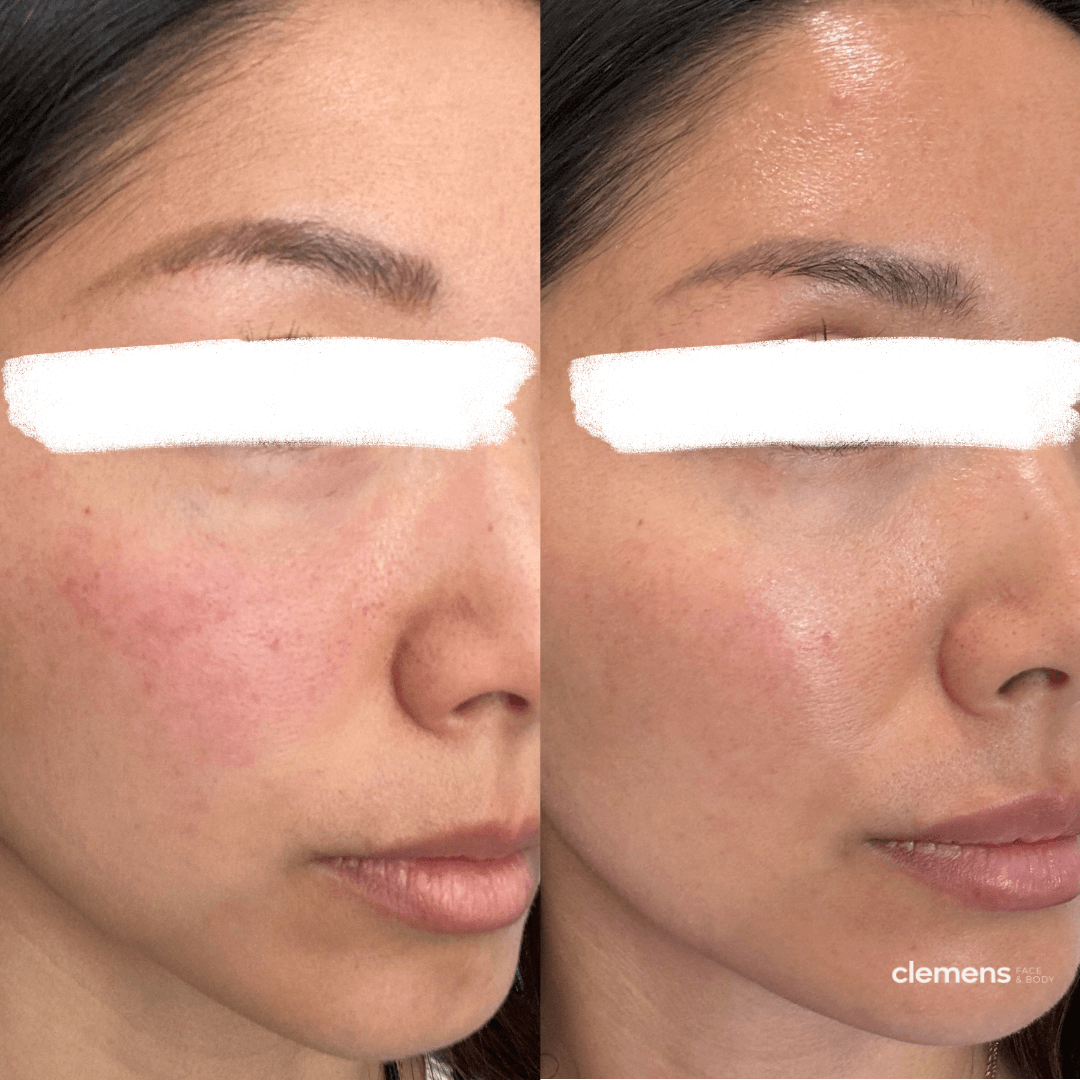
6 weeks after 2nd microneedling with PDRN
Image © Clemens Face + Body. Unauthorized use or reproduction prohibited.
How PDRN May Benefit Rosacea-Prone Skin
Although research is still evolving, there are several reasons why PDRN has generated interest among patients with sensitive or rosacea-prone skin.
Supporting the Skin Barrier
Rosacea patients have a compromised skin barrier.
When the skin barrier is weakened, moisture escapes more easily and irritants can penetrate more readily, leading to increased sensitivity.
PDRN supports the skin's natural repair processes.
Helping Calm Inflammation
Chronic inflammation plays a major role in rosacea.
While PDRN should not be considered a medical treatment for rosacea itself, studies suggest it may possess anti-inflammatory properties that help calm the skin for long periods of time.
Improving Recovery and Skin Health
Rosacea-prone skin often struggles to recover from irritation.
PDRN is frequently used to support tissue repair and may help improve the skin's ability to recover from environmental stressors and everyday irritation.
Enhancing Overall Skin Quality
Many patients who undergo PDRN treatment also notice improvements in:
Hydration
Texture
Skin smoothness
Skin radiance
Overall skin health
What PDRN Cannot Do
One of the biggest misconceptions surrounding newer skin treatments is that they can "fix" rosacea.
PDRN has limitations.
PDRN is not:
A cure for rosacea
A replacement for prescription medications
A treatment that permanently removes visible blood vessels
A substitute for identifying and avoiding triggers
If visible facial vessels or persistent redness are your primary concerns, vascular laser treatments may still be more effective options.
For many patients, PDRN works best as part of a broader treatment plan rather than as a standalone solution.
Is Microneedling with PDRN Safe for Rosacea?
Patients with mild, well-controlled rosacea benefit significantly from microneedling combined with PDRN.
For others experiencing active flare-ups, significant inflammation, or severe skin sensitivity, treatment may need to be postponed until the skin is more stable.
You may be a good candidate if:
Your rosacea is relatively stable
You primarily struggle with sensitivity and skin quality concerns
You are interested in improving skin resilience
You prefer non-laser treatment options
You may not be a good candidate if:
Your rosacea is actively flaring
Your skin burns or stings frequently
You have significant inflammation at baseline
Your skin cannot tolerate minor stimulation
You have severe papulopustular rosacea types.
What Results Can Patients Expect?
As with most regenerative treatments, results tend to develop gradually over time. A series of 3 sessions over several months may be needed to see significant changes. In addition, optimization of at-home skin care is paramount to ensuring the barrier is not further damaged.
In summary, when PDRN is microneedled in the right patient, they can expect:
Better hydration
Improved skin texture
Stronger skin barrier function
Reduced sensitivity
Healthier overall skin appearance
On the other hand, patients should not expect:
Complete elimination of redness
Permanent correction of rosacea
Removal of visible blood vessels
Immediate results after a single treatment
Frequently Asked Questions
Can PDRN make rosacea worse?
In appropriately selected patients, PDRN is generally well tolerated. However, every patient's skin is different, and active rosacea flare-ups may increase the risk of irritation.
Is Microneedling with PDRN Safe for Sensitive Skin?
Often, yes. Patients with mild skin sensitivity or a weakened skin barrier may benefit from microneedling with PDRN due to its healing and restorative properties. However, patients experiencing active irritation, eczema, or rosacea flare-ups may need to stabilize their skin before treatment. A consultation can help determine whether PDRN is appropriate for your skin type and concerns.
Is PDRN better than laser treatment for rosacea?
Not necessarily. They address different concerns. Laser treatments target blood vessels and redness, while PDRN focuses on supporting skin health and repair.
Can PDRN reduce facial redness?
Some patients notice improvements in overall skin calmness, but PDRN should not be viewed as a direct treatment for redness.
How many treatments are needed?
Most patients benefit from a series of treatments rather than a single session.
Can PDRN be combined with microneedling?
Yes. Microneedling is one of the most common ways PDRN is delivered and may enhance penetration into the skin.
The Bottom Line
For many rosacea patients, the goal is not perfect skin. It's healthier, calmer, more resilient skin that feels less reactive day to day.
While PDRN is not a cure for rosacea, it may offer meaningful benefits for patients looking to strengthen their skin barrier, support healing, and improve overall skin quality.
The best candidates are often those with relatively stable rosacea who are seeking a gentle, regenerative approach to skin rejuvenation rather than an aggressive corrective treatment.
Read More About PDRN Here
Ready to Give Your Skin a Stronger Foundation?
Patients with rosacea know what it’s like to spend years cycling through products, avoiding triggers, and hoping the next solution will finally calm the skin. While there is no single treatment that works for everyone, many find that improving the health of their skin barrier is one of the most important first steps toward healthier, less reactive skin.
Clemens Face + Body gives every patient a treatment plan rooted in careful assessment of your skin, concerns, and goals.
If you're curious whether microneedling with PDRN may be appropriate for your rosacea-prone skin, schedule a consultation to discuss your options and build a plan tailored to you.
Book your consultation today.
