
How to Get Rid of Jowls: Non-Surgical Treatments That Restore Jawline Definition
Clemens Face + Body | Brookline, Boston
Jowls are one of the most common facial aging concerns patients notice over time. What often begins as a subtle softening along the jawline can gradually develop into fullness along the lower face and a loss of definition between the jaw and neck.
Many people assume jowls are simply loose skin. In reality, they develop from a combination of structural changes that occur with age, including bone resorption, fat redistribution, and the downward pull of facial muscles.
Understanding these underlying causes helps determine the most effective treatment approach.
What causes jowls?
Several structural changes contribute to the development of jowls.
Loss of bone support in the jaw and chin reduces the framework that once held facial tissue in place. As this support diminishes, the surrounding soft tissue begins to descend.
Fat compartments within the face also shift over time. Areas such as the temples may become hollow, while volume accumulates lower in the face. This redistribution contributes to heaviness along the jawline.
Muscle activity in the neck also plays a role. The platysma muscle runs vertically along the neck and pulls downward on the jawline when it contracts. Over time this can accentuate the appearance of jowls.
Because these changes occur across multiple layers of the face, effective treatment often involves addressing more than one area.
Treating the temples to improve jowls
Temple volume loss is one of the most overlooked contributors to lower face aging. Hollowing in this area can create a deflated appearance in the upper face and reduce the structural support that helps maintain facial balance.
Temple filler is underused but can have an indirect impact on improving jowls. When treating the temples, filler is placed in a deep anatomical layer that is contiguous with the same structural layer from which the jowls originate (SMAS). Restoring volume in the temples helps reestablish support within this layer.
Revolumizing the temples redistributes tension across the facial framework and can create a subtle lifting effect that helps camouflage the appearance of jowls.
At Clemens Face + Body, temple filler is approached conservatively. Typically one syringe is placed per visit to avoid overtreatment and allow the tissue to gradually adapt.
Estimated investment: $900 depending on the amount of volume required
Treatment longevity: approximately 1–3 years depending on baseline volume depletion
The Nefertiti neck lift (“Lower Face Refinement Tox”)
Another treatment that improves jowls addresses muscle activity rather than volume loss.
The Nefertiti neck lift uses wrinkle relaxers to target the platysma muscle and DAO muscles (depressor angularis oris). The platysma muscle runs from the chest up to the jawline and contributes to the downward pull of the lower face, while the DAOs are responsible for the producing frowns, which can exacerbate the appearance of marionette lines.
When wrinkle relaxer is placed strategically along the platysma, DAOs, and jawline, the downward pull of the muscles are reduced. This allows the upper facial muscles to create a subtle lifting effect along the jawline and neck.
At Clemens Face + Body this treatment is often referred to as “Lower Face Refinement Tox”, reflecting its ability to soften neck banding while improving jawline definition.
Estimated investment: $600
Treatment longevity: approximately 3–6 months depending on baseline anatomy
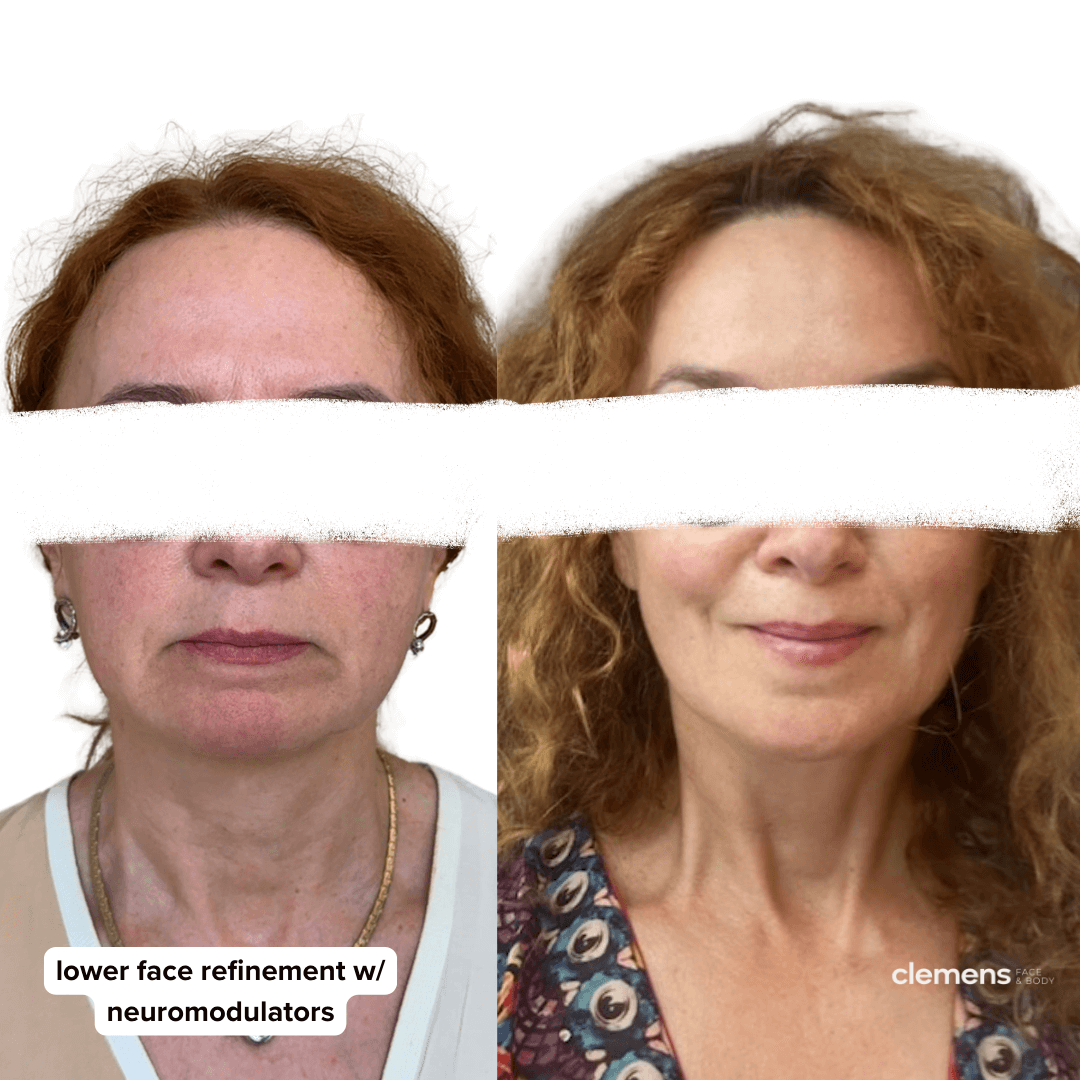
One of our patients who received our ‘Lower Face Refinement Tox’ treatment to target jowls, lower face heaviness, ‘turkey neck,’ and passive frowning.
Image © Clemens Face + Body. Unauthorized use or reproduction prohibited.
Restoring structure along the jawline
Dermal filler is frequently used along the jawline and preauricular space (the area that sits just in front of the ears) to restore structure and improve the contour of the lower face.
Because the jawline spans a larger surface area, treatments here typically require more product than other areas of the face. Filler is placed strategically along both the posterior jawline near the angle of the jaw and the anterior jawline closer to the chin, and in the preauricular space.
Strengthening these areas can restore definition and create a cleaner transition between the lower face and neck.
Estimated investment: $1800-$2500 depending on the amount of filler required
Treatment longevity: approximately 2–3 years depending on volume depletion
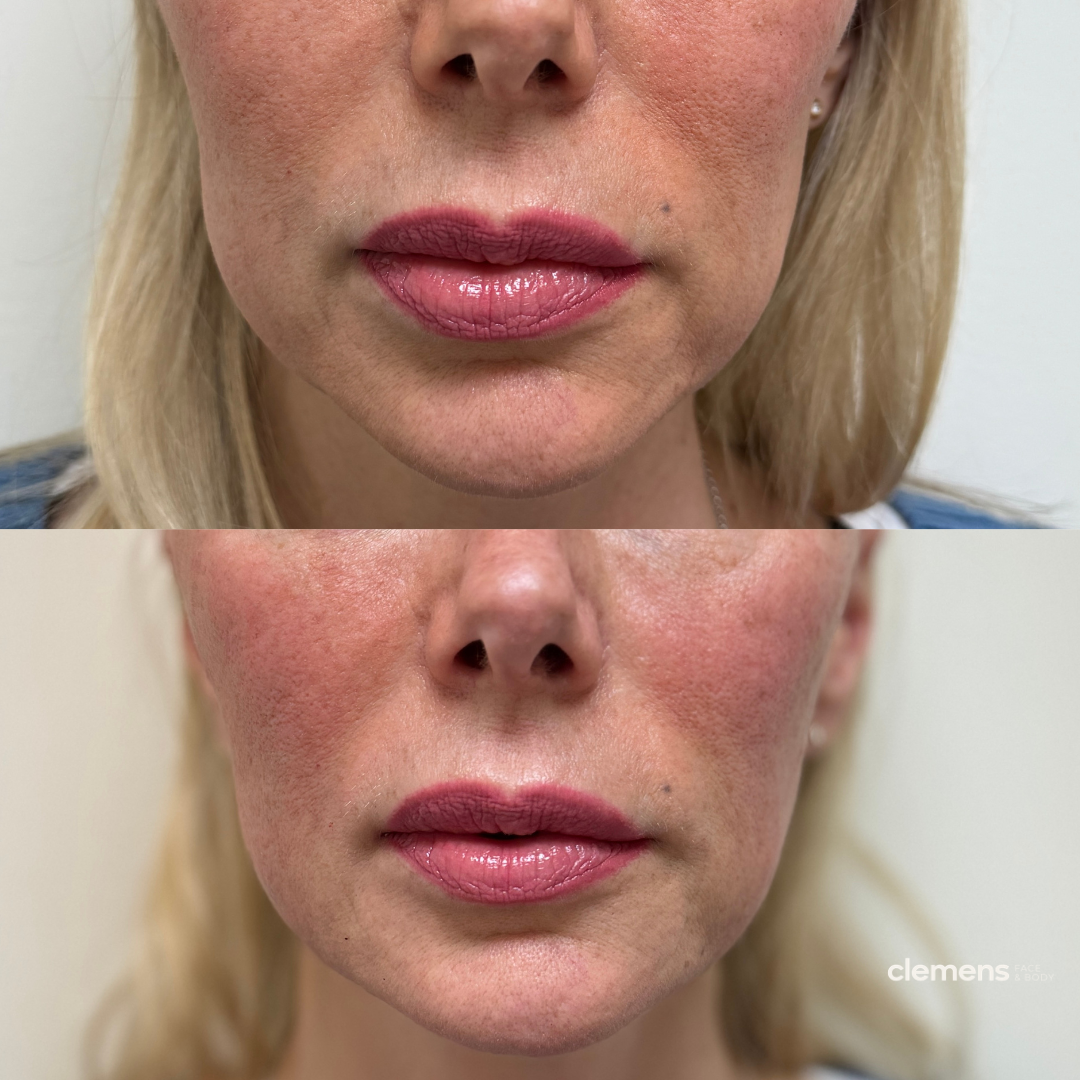
One of our patients who received dermal filler treatment
in her jawline, pre-auricular, chin shadow, and pre-jowl sulcus.
Image © Clemens Face + Body. Unauthorized use or reproduction prohibited.
Treating the chin shadow and prejowl sulcus
A key contributor to jowls is the depression that forms on either side of the chin. This area is known as the prejowl sulcus.
As bone support diminishes over time, this indentation becomes more pronounced. The surrounding tissue then appears heavier by comparison, which accentuates the appearance of jowls.
Filler placed within the chin shadow and prejowl sulcus restores a smoother contour along the jawline. By filling this depression, the transition between the chin and jawline becomes more continuous and balanced.
Estimated investment: $1800 depending on the degree of correction required
Treatment longevity: approximately 2–3 years
A note on investment
Treatments that restore facial structure should be considered a long-term investment rather than a short-term cosmetic fix. When dermal fillers are placed thoughtfully and conservatively, they integrate with the surrounding tissue and gradually evolve with the face over time.
By restoring structural support earlier in the aging process, these treatments can slow the progression of volume loss and facial descent. In many cases, this reduces the need for more invasive and costly interventions later in life while preserving natural facial character.
A thoughtful approach to facial aging
Treating jowls often requires addressing multiple areas of the face rather than focusing on a single feature. Temple volume restoration can provide structural support, wrinkle relaxers can soften downward muscular pull, and filler along the jawline and chin can restore definition and balance.
When performed with precision, these treatments work together to improve facial harmony while preserving each person’s natural characteristics.
Considering treatment for jowls?
If you’ve noticed early changes along the jawline or lower face, a personalized consultation can help determine which approach is most appropriate for your anatomy. Many patients benefit from a combination of treatments designed to restore structure, refine contours, and improve overall facial balance.
To learn more about the treatment options available, visit our Lower Face Rejuvenation page, where we outline how jawline filler, chin support, and other structural treatments can improve definition along the lower face.
If you’re unsure where to begin, you can also book a “Tell Me What I Need Consultation” for a comprehensive facial assessment and treatment plan tailored to your features.
